Why Your CRM Should Follow Your Sales Process — Not the Other Way Around
Customer Relationship Management systems are designed to bring clarity, structure, and visibility to sales operations. Yet for many organizations, CRM tools become a source of friction rather than insight.
Sales teams avoid them.
Data becomes inconsistent.
Reports don’t reflect reality.
When this happens, the problem is rarely the CRM software itself.
The real issue is how the CRM was designed.
The Most Common CRM Mistake
Most CRM projects start with a tool.
A platform is selected, accounts are created, and teams are told to “use the CRM”. The sales process is then adjusted to fit predefined pipelines, fields, and workflows.
This approach often leads to:
-
Forced sales stages that don’t match reality
-
Manual data entry with little perceived value
-
Shadow spreadsheets alongside the CRM
-
Low adoption and poor reporting
A CRM should adapt to the business, not the opposite.
CRM Should Reflect the Real Customer Journey
Every business has a unique customer journey.
This includes:
-
How leads are generated
-
How conversations actually progress
-
How decisions are made
-
How deals are approved and closed
-
How customers are onboarded and supported
When CRM architecture is built around this journey, it stops being a reporting obligation and becomes a working system for the entire organization.
Why Off-the-Shelf CRM Setups Often Fail
Out-of-the-box CRM configurations are designed to work for everyone — which often means they work perfectly for no one.
Common limitations include:
-
Rigid pipelines that don’t reflect sales reality
-
Overloaded interfaces with unused features
-
Poor alignment between sales, marketing, and support
-
Limited flexibility for integrations and automation
As teams grow, these limitations become blockers rather than helpers.
CRM as a Single Source of Truth
A well-designed CRM becomes the system leadership trusts.
It should:
-
Centralize customer data across teams
-
Capture communication history automatically
-
Reflect the real pipeline status
-
Provide accurate forecasting
-
Eliminate duplicate data and manual reporting
This is especially critical for organizations operating across Africa, GCC, and MENA, where teams are often distributed and coordination matters.
CRM and Google Workspace: Where Productivity Improves
CRM adoption increases dramatically when it integrates naturally with daily tools.
When CRM works alongside Gmail, Google Calendar, and Drive:
-
Emails are tracked without extra effort
-
Meetings and follow-ups are logged automatically
-
Customer documents are always accessible
-
Sales teams stay inside familiar workflows
This reduces friction and improves data quality organically.
Automation and AI Inside CRM
Modern CRM systems are no longer static databases.
With automation and AI, CRM can:
-
Route leads intelligently
-
Trigger follow-ups automatically
-
Highlight stalled opportunities
-
Surface insights from customer behavior
-
Reduce administrative overhead
When CRM architecture is designed correctly, automation enhances decision-making instead of complicating it.
When Is It Time to Rethink Your CRM?
You should revisit your CRM design if:
-
Sales teams avoid using it
-
Reports don’t match reality
-
Forecasting feels unreliable
-
Data lives across multiple tools
-
You rely heavily on spreadsheets
These are not user failures — they are architectural signals.
Designing CRM the Right Way
Effective CRM consultancy starts with:
-
Mapping real sales and customer processes
-
Designing clean data models
-
Aligning pipelines with behavior
-
Integrating communication tools
-
Supporting adoption through training and iteration
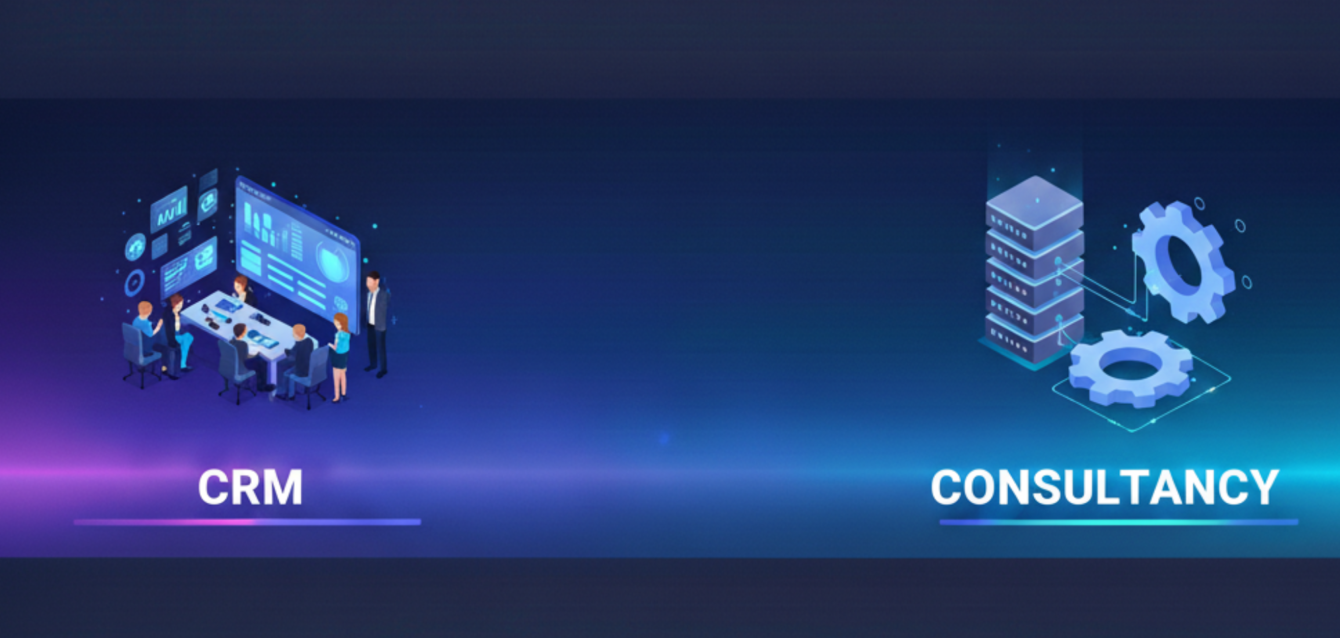
This is the approach we take in our CRM Consultancy engagements, where CRM systems are designed to fit the business — not constrain it.
“A CRM should reflect how sales actually happen, not how software expects them to.
CEO, Inboxive
When CRM architecture is built around real customer journeys, adoption improves naturally and leadership finally gets data they can trust.”
👉 Learn more about our CRM & ERP Consultancy services and how we help organizations build CRM systems that scale with their sales operations.